

Summer Storms and Short-Staffing Cause Massive Travel Disruptions
On Monday, storms impacting the East Coast, stretching from Tennessee to New York, led to nearly 9,000 flights being delayed and an additional 1,768 cancellations across the U.S., as reported by FlightAware. A significant portion of these disruptions took place at Hartsfield-Jackson Atlanta International Airport, one of the world's busiest airports. It witnessed over 590 delays for departing flights, making up almost half of its daily roster, and more than 500 arriving flights were delayed, representing about 41% of its planned schedule.
Atlanta-based Delta Air Lines was particularly hard hit, which saw more than 1,300 delays and 440 flights canceled, or 11% of its entire schedule. "Due to continued severe weather that impacted our Atlanta hub, Delta teams are working hard to recover the operation and we apologize to our customers who've experienced delays to their travel plans," a spokesperson from the airline said in a statement aired on CNN.
The havoc continued into Tuesday, with another 1,400 delays and over 300 cancellations reported by noon, striking close to 17% of 10,060 daily scheduled commercial flights. The storms will impact an estimated 120 million travelers.
In response to the storms, the Federal Aviation Administration (FAA) announced plans to reduce or slow flights in the New York, Philadelphia, and Washington D.C. regions. It warned that weather-related delays might strike as far south as Florida. It is estimated that up to 120 million travelers will be affected.
The storms are not solely responsible for the mass delays and cancellations. Since the end of the Pandemic, airlines have been slow to hire enough employees to cover their operations. United Airlines, for example, used COVID Aid funding designed to retain its workforce to instead lure employees into early retirement. Like other airlines, United is now struggling to find new employees soon enough to handle summer and post-pandemic demand.
In July, Transportation Secretary Pete Buttigieg said his department is investigating several airlines, including United, for "unrealistic scheduling." According to Secretary Buttigieg, airlines were selling more tickets than they could reasonably expect to accommodate. According to Buttigieg, this practice was directly responsible for delays and cancellations during peak travel periods.
Commercial airlines urgently need to hire 32,000 new pilots, ramp and gate agents, and air traffic controllers, among other critical staff. The Department of Transportation says airlines are falling further behind each year, meaning the airline staffing crisis could stretch out over the next decade.


Related News
Three Quick Facts About Kamala Harris, Biden’s VP Pick
Ending weeks of speculation, Democratic presidential candidate Joe Biden announced on Tuesday he has selected Senator Kamala Harris as his running mate. If elected, Harris will become the first woman to hold the office of Vice President of the United States. She would...
Airlines Post Best Numbers in Months
More than 800,000 Americans passed through TSA checkpoints on Monday, the most since mid-March. The uptick comes as key Senators begin to voice support for an additional round of payroll assistance for airlines, and stock prices for carriers post their most...
DO IT AGAIN: Keep Asking Your Senator to Support Airline Payroll Protection Until a Deal Passes
The IAMAW, along with a coalition of airline unions, is gaining momentum on Capitol Hill. After securing support from a bipartisan majority of the U.S. House, the IAM needs your help convincing the Senate that they must act now to save hundreds of thousands of airline...
Stay up to date with all the latest news and information from the Machinists Union
Summer Storms and Short-Staffing Cause Massive Travel Disruptions
August 8, 2023
On Monday, storms impacting the East Coast, stretching from Tennessee to New York, led to nearly 9,000 flights being delayed and an additional 1,768 cancellations across the U.S., as reported by FlightAware. A significant portion of these disruptions took place at Hartsfield-Jackson Atlanta International Airport, one of the world's busiest airports. It witnessed over 590 delays for departing flights, making up almost half of its daily roster, and more than 500 arriving flights were delayed, representing about 41% of its planned schedule.
Atlanta-based Delta Air Lines was particularly hard hit, which saw more than 1,300 delays and 440 flights canceled, or 11% of its entire schedule. "Due to continued severe weather that impacted our Atlanta hub, Delta teams are working hard to recover the operation and we apologize to our customers who've experienced delays to their travel plans," a spokesperson from the airline said in a statement aired on CNN.
The havoc continued into Tuesday, with another 1,400 delays and over 300 cancellations reported by noon, striking close to 17% of 10,060 daily scheduled commercial flights. The storms will impact an estimated 120 million travelers.
In response to the storms, the Federal Aviation Administration (FAA) announced plans to reduce or slow flights in the New York, Philadelphia, and Washington D.C. regions. It warned that weather-related delays might strike as far south as Florida. It is estimated that up to 120 million travelers will be affected.
The storms are not solely responsible for the mass delays and cancellations. Since the end of the Pandemic, airlines have been slow to hire enough employees to cover their operations. United Airlines, for example, used COVID Aid funding designed to retain its workforce to instead lure employees into early retirement. Like other airlines, United is now struggling to find new employees soon enough to handle summer and post-pandemic demand.
In July, Transportation Secretary Pete Buttigieg said his department is investigating several airlines, including United, for "unrealistic scheduling." According to Secretary Buttigieg, airlines were selling more tickets than they could reasonably expect to accommodate. According to Buttigieg, this practice was directly responsible for delays and cancellations during peak travel periods.
Commercial airlines urgently need to hire 32,000 new pilots, ramp and gate agents, and air traffic controllers, among other critical staff. The Department of Transportation says airlines are falling further behind each year, meaning the airline staffing crisis could stretch out over the next decade.
Related
Three Quick Facts About Kamala Harris, Biden’s VP Pick
Ending weeks of speculation, Democratic presidential candidate Joe Biden announced on Tuesday he has selected Senator Kamala Harris as his running mate. If elected, Harris will become the first woman to hold the office of Vice President of the United States. She would...
Airlines Post Best Numbers in Months
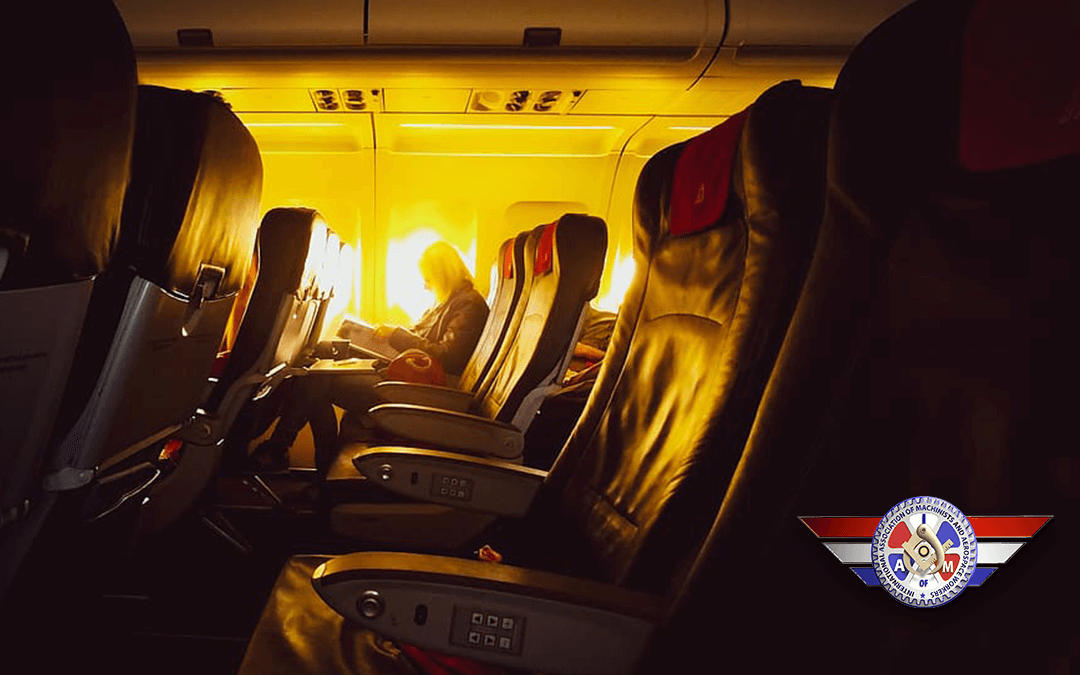
More than 800,000 Americans passed through TSA checkpoints on Monday, the most since mid-March. The uptick comes as key Senators begin to voice support for an additional round of payroll assistance for airlines, and stock prices for carriers post their most...
DO IT AGAIN: Keep Asking Your Senator to Support Airline Payroll Protection Until a Deal Passes
The IAMAW, along with a coalition of airline unions, is gaining momentum on Capitol Hill. After securing support from a bipartisan majority of the U.S. House, the IAM needs your help convincing the Senate that they must act now to save hundreds of thousands of airline...