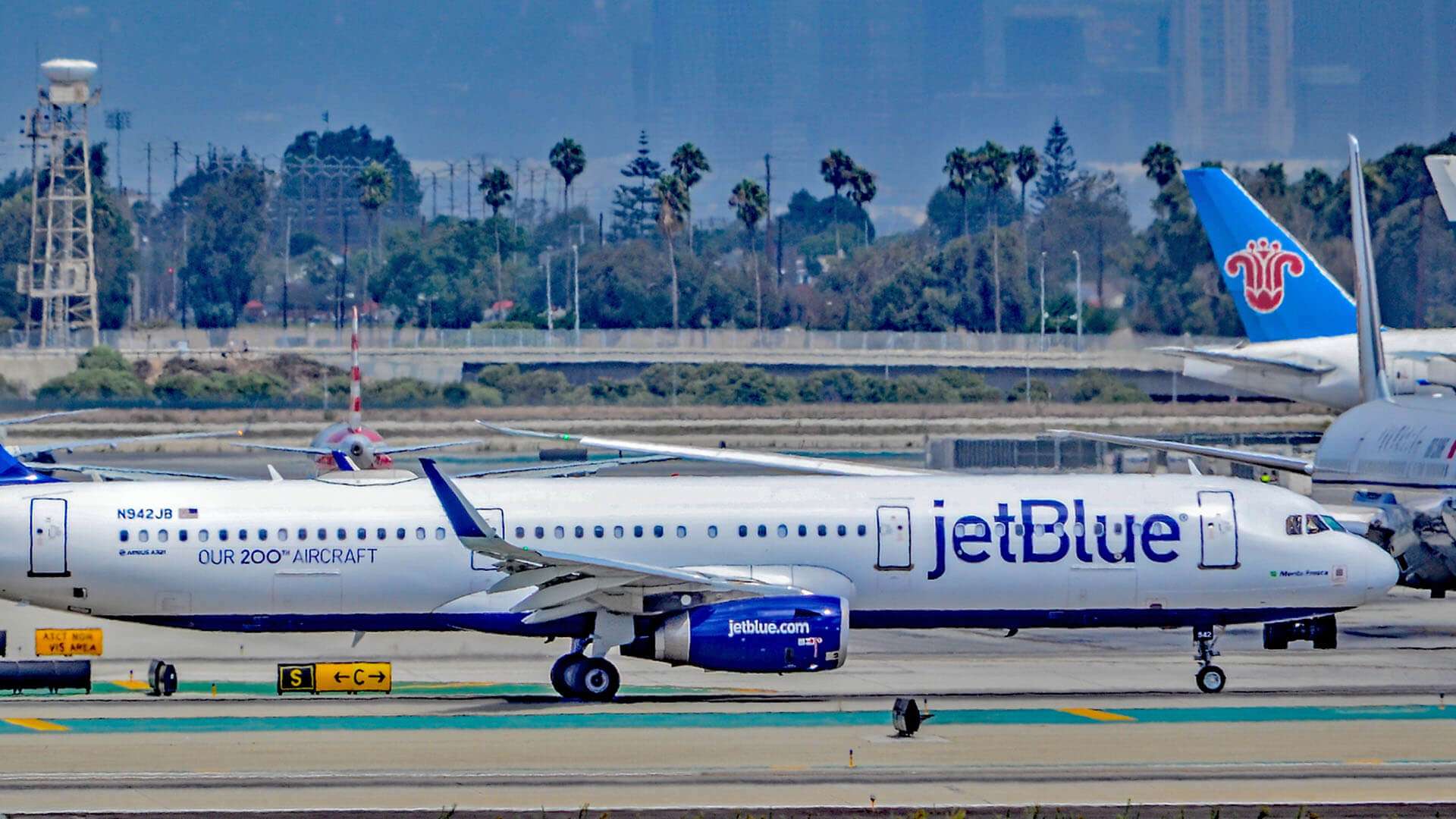
JetBlue is a company that has been mismanaged for years. Now, that poor management has invited numerous court actions and unwanted ire from the Justice Department.
JetBlue Merger Hits More Turbulance
Organizing
7 November 2022
JetBlue is facing mounting scrutiny over its planned merger with Spirit. A group of airline workers and consumers are filing a court challenge to try and slow the "almost unstoppable" march towards airline megalopoly.
The action comes as JetBlue posts the worst 3rd Quarter profits of any major carrier, earning a dismal $.21 a share, prompting investor concerns that airline management may be underperforming at a critical moment for the carrier. It’s also happening at a time when the airline is facing mounting concerns from the Justice Department over it’s de-facto merger with American in the Northeast markets.CEO Robin Hayes is expected to appear in court to defend the airline’s actions in that case. The airline is also facing questions from unions, who are asking if the company is being irresponsible financially, overpaying investors with what is being called “hush money” in case the deal with Spirit falls through. Unions are also calling for the airline to raise wages and offer better work / life balance for employees.

Flight Crews and consumers filed an injunction asking a Federal Judge to stop the planned $3.8 Billion merger between JetBlue Airways and Spirit Airlines in hopes of preserving one of the few remaining discount carriers in the U.S.
The group filed to stop the deal on Thursday, asking the U.S. District Court for the Northern District of California to block the transaction. The group argues that the new, larger airline could dominate key markets, leaving consumers no choice but to pay ticket prices that are impossible for either airline to command today.
If the merger goes through, the complaint argues, consumers "would not only lose the competition of Spirit, but also the potential competition that JetBlue would provide by building its own national presence the old-fashioned way, by competing for passengers instead of buying them."
JetBlue is the sixth-largest airline operating in the U.S. Spirit is the seventh. The combined airline would immediately become the fifth-largest air carrier, right behind American, Delta, Southwest, and United.

The complaint argues that Spirit is a significant price-cutting rival of JetBlue and other major carriers and that, if the airline were eliminated from the commercial aviation ecosystem, other airlines would be free to hike fares on consumers. Moreover, the "current trend toward concentration, the lessening of competition, and the tendency to create a monopoly in the airline industry are unmatched and unparalleled," the suit read.
It goes on to suggest that monopolistic power was the primary goal of the merger. "JetBlue would gain a majority market share on more than a dozen routes where neither it nor Spirit previously dominated, and it would eliminate the price-cutting by Spirit. Therefore, JetBlue made an unsolicited tender offer to purchase Spirit in order to eliminate that competition," according to the filing.
The complaint states that Spirit is unique in commercial aviation because it's small enough to survive on smaller ticket prices but large enough to compete against mega-carriers such as United and Southwest.
"Spirit, with its innovative, low-cost service, is an important bulwark against this almost unstoppable trend toward complete concentration and monopoly in the airline industry," the suit says.

The proposed merger wouldn't just eliminate another discount option for travelers; it would also remove an essential reason for the four mega-carriers to avoid "abuses" directed toward the flying public. If the Big Four airlines are no longer afraid of losing passengers to Spirit, the result may be skies that are even less friendly than they already are. If the JetBlue / Spirit deal is ultimately allowed to go forward, discount airfares in the U.S. will shrink by 50% overnight.
Earlier in 2022, the Spirit Board and executives concluded that a merger between Spirit and JetBlue could never be approved by regulators and was, therefore, "illusory." The Board then rejected an earlier offer by JetBlue. JetBlue offered to "sweeten the deal" by paying the shareholders $400 million if the proposed combination failed. Thus the shareholders could move forward with the JetBlue combination without any risks. The $400 million to shareholders was to quiet the shareholder's knowledge of the potential illegality of the acquisitions and was little more than “hush money” according to the suit.


No Results Found
The page you requested could not be found. Try refining your search, or use the navigation above to locate the post.
Related News

Mary Sansom Has Receipts: A union activist who has recorded and made history
"Shut 'Em Down!"Mary Sansom has fought for airline workers for decades, taking on managers, politicians, and even retirement on the way.Sister Mary Sansom was initiated into Local 1833 of the Machinists Union in 1973 when she began working in the flight kitchen at...
LAST CALL FOR THE CENSUS: Stand Up and Be Counted
The US Census Bureau announced this week it will end all operations to gather data for the 2020 Census at 11:59 PM Hawaii Standard Time on Thursday, October 15, after the Supreme Court agreed to suspend an order from a lower court that extended the timeline for the...
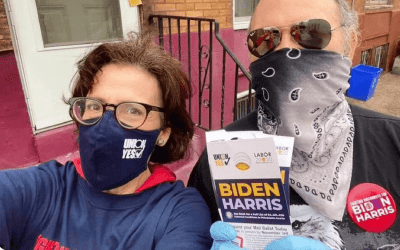
“Vote Early, Stay Safe” Pennsylvania Machinists Get Out the Vote on the Streets of Philadelphia
A small army of Fighting Machinists took to the streets of Philadelphia this week to encourage union members to get out and vote.In-person early voting is underway in Pennsylvania, and members of IAM Air Transport Local 1776 left voting information on the doors of...
JetBlue Merger Hits More Turbulence
7 November 2022
JetBlue is facing mounting scrutiny over its planned merger with Spirit. A group of airline workers and consumers are filing a court challenge to try and slow the "almost unstoppable" march towards airline megalopoly.
The action comes as JetBlue posts the worst 3rd Quarter profits of any major carrier, earning a dismal $.21 a share, prompting investor concerns that airline management may be underperforming at a critical moment for the carrier. It’s also happening at a time when the airline is facing mounting concerns from the Justice Department over its de-facto merger with American in the Northeast markets.CEO Robin Hayes is expected to appear in court to defend the airline’s actions in that case. The airline is also facing questions from unions, who are asking if the company is being irresponsible financially, overpaying investors with what is being called “hush money” in case the deal with Spirit falls through. Unions are also calling for the airline to raise wages and offer better work/life balance for employees.
Flight Crews and consumers filed an injunction asking a Federal Judge to stop the planned $3.8 Billion merger between JetBlue Airways and Spirit Airlines in hopes of preserving one of the few remaining discount carriers in the U.S.
The group filed to stop the deal on Thursday, asking the U.S. District Court for the Northern District of California to block the transaction. The group argues that the new, larger airline could dominate key markets, leaving consumers no choice but to pay ticket prices that are impossible for either airline to command today.
If the merger goes through, the complaint argues, consumers "would not only lose the competition of Spirit, but also the potential competition that JetBlue would provide by building its own national presence the old-fashioned way, by competing for passengers instead of buying them."
JetBlue is the sixth-largest airline operating in the U.S. Spirit is the seventh. The combined airline would immediately become the fifth-largest air carrier, right behind American, Delta, Southwest, and United.
The complaint argues that Spirit is a significant price-cutting rival of JetBlue and other major carriers and that, if the airline were eliminated from the commercial aviation ecosystem, other airlines would be free to hike fares on consumers. Moreover, the "current trend toward concentration, the lessening of competition, and the tendency to create a monopoly in the airline industry are unmatched and unparalleled," the suit read.
It goes on to suggest that monopolistic power was the primary goal of the merger. "JetBlue would gain a majority market share on more than a dozen routes where neither it nor Spirit previously dominated, and it would eliminate the price-cutting by Spirit. Therefore, JetBlue made an unsolicited tender offer to purchase Spirit in order to eliminate that competition," according to the filing.
The complaint states that Spirit is unique in commercial aviation because it's small enough to survive on smaller ticket prices but large enough to compete against mega-carriers such as United and Southwest.
"Spirit, with its innovative, low-cost service, is an important bulwark against this almost unstoppable trend toward complete concentration and monopoly in the airline industry," the suit says.
The proposed merger wouldn't just eliminate another discount option for travelers; it would also remove an essential reason for the four mega-carriers to avoid "abuses" directed toward the flying public. If the Big Four airlines are no longer afraid of losing passengers to Spirit, the result may be skies that are even less friendly than they already are. If the JetBlue / Spirit deal is ultimately allowed to go forward, discount airfares in the U.S. will shrink by 50% overnight.
The proposed merger wouldn't just eliminate another discount option for travelers; it would also remove an essential reason for the four mega-carriers to avoid "abuses" directed toward the flying public. If the Big Four airlines are no longer afraid of losing passengers to Spirit, the result may be skies that are even less friendly than they already are. If the JetBlue / Spirit deal is ultimately allowed to go forward, discount airfares in the U.S. will shrink by 50% overnight.
Earlier in 2022, the Spirit Board and executives concluded that a merger between Spirit and JetBlue could never be approved by regulators and was, therefore, "illusory." The Board then rejected an earlier offer by JetBlue. JetBlue offered to "sweeten the deal" by paying the shareholders $400 million if the proposed combination failed. Thus the shareholders could move forward with the JetBlue combination without any risks. The $400 million to shareholders was to quiet the shareholder's knowledge of the potential illegality of the acquisitions and was little more than “hush money” according to the suit.
Related News
Mary Sansom Has Receipts: A union activist who has recorded and made history
"Shut 'Em Down!"Mary Sansom has fought for airline workers for decades, taking on managers, politicians, and even retirement on the way.Sister Mary Sansom was initiated into Local 1833 of the Machinists Union in 1973 when she began working in the flight kitchen at...
LAST CALL FOR THE CENSUS: Stand Up and Be Counted
The US Census Bureau announced this week it will end all operations to gather data for the 2020 Census at 11:59 PM Hawaii Standard Time on Thursday, October 15, after the Supreme Court agreed to suspend an order from a lower court that extended the timeline for the...
“Vote Early, Stay Safe” Pennsylvania Machinists Get Out the Vote on the Streets of Philadelphia
A small army of Fighting Machinists took to the streets of Philadelphia this week to encourage union members to get out and vote.In-person early voting is underway in Pennsylvania, and members of IAM Air Transport Local 1776 left voting information on the doors of...