The Dawn of the Machinists Union
The Dawn of the Machinists Union
In the smoky workshops of late 19th century America, a revolution was brewing. The Industrial Age, with its booming factories and powerful railroads, had brought both progress and hardship. While innovation flourished, so did worker exploitation. It was against this backdrop that a small group of machinists in Atlanta, Georgia, took a stand for themselves and their fellows, sparking the birth of the International Association of Machinists and Aerospace Workers (IAMAW), a labor union that would leave an indelible mark on American history.
The year was 1888. Thomas W. Talbot, a skilled railroad machinist, witnessed firsthand the plight of his colleagues. Wages were slashed, working conditions were grueling, and job security was nonexistent. Having previously belonged to the Knights of Labor, a broader labor organization, Talbot believed a more focused approach was needed. He envisioned a union specifically for machinists, one that could effectively address their unique challenges.
On May 5th, 1888, with the resolve of those facing an uphill battle, Talbot and 18 other machinists gathered in a locomotive pit, a symbolic location for their clandestine meeting. This makeshift conference room became the birthplace of the Order of United Machinists and Mechanical Engineers, the precursor to the IAMAW.
The fledgling union’s goals were clear: resist wage cuts, secure better working conditions, and establish a safety net for members through unemployment, illness, and accident benefits. It also aimed to elevate the status of machinists, recognizing their skilled craft and demanding fair compensation.
However, the path wouldn’t be easy. The late 19th century was a period of fierce anti-union sentiment. Powerful industrialists saw unions as a threat to their control and wielded their influence to suppress them. Early strikes were often met with violence and strikebreakers. The fledgling union faced constant challenges in securing recognition and bargaining rights from employers.
Despite the obstacles, the Order of United Machinists and Mechanical Engineers persevered. They adopted a motto – “Organization, Cooperation, Education” – reflecting their commitment to building a strong worker base, fostering solidarity, and promoting skills development. This combination of activism and education proved to be a winning formula.
Within a year, the organization held its first convention in Atlanta, Georgia, changing its name to the National Association of Machinists (NAM). The convention established a formal structure, including elected officers and local chapters, laying the groundwork for a national organization.
By the 1890s, the NAM was expanding its reach beyond railroads, attracting machinists from various industries, including manufacturing and shipbuilding. This growth necessitated a name change again, and in 1891, the organization became the International Association of Machinists (IAM).
The IAM’s early victories, including securing the first ever union contract with a major railroad in 1892, proved its effectiveness. This success inspired other skilled workers to organize, contributing to the broader labor movement.
The story of the Machinists Union’s founding is a testament to the power of collective action. It’s a reminder that the fight for fair wages, safe working conditions, and worker dignity is a continuous struggle. From those humble beginnings in a locomotive pit, the IAMAW has grown into a powerful organization representing hundreds of thousands of workers across North American industries. As the organization continues to evolve and address new challenges, the spirit of those 19 machinists who dared to fight for a better future remains a cornerstone of the IAMAW’s legacy.

Related News

Have You Voted Yet?
We wanted to check in to make sure you have voted or have a plan to vote in this very important election. Visit iam2020.org to get all the information you need to vote. You may remember that IAM members voted to endorse Joe Biden in a first-of-its-kind membership vote...

“Halloween Hurricane” Zeta Batters Air Travel Along the Gulf Coast
Zeta has weakened to a tropical storm over Alabama after slamming into the Louisiana Coastline as a Catagory 2 hurricane just days before Halloween. Airline workers have faced 27 tropical storms in 2020, with 11 of them strengthening to hurricane status. The last year...
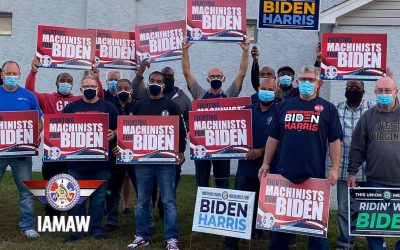
VOTE! Only One Week Left
There are seven days left before Election Day and we want to make sure every Machinists Union member has a plan to vote. There is too much at stake to sit this election out. Visit iam2020.org today to find your polling place, see early voting locations, locate a...
Stay up to date with all the latest news and information from the District 141 of the Machinists Union
The Dawn of the Machinists Union
14 May 2024
In the smoky workshops of late 19th century America, a revolution was brewing. The Industrial Age, with its booming factories and powerful railroads, had brought both progress and hardship. While innovation flourished, so did worker exploitation. It was against this backdrop that a small group of machinists in Atlanta, Georgia, took a stand for themselves and their fellows, sparking the birth of the International Association of Machinists and Aerospace Workers (IAMAW), a labor union that would leave an indelible mark on American history.
The year was 1888. Thomas W. Talbot, a skilled railroad machinist, witnessed firsthand the plight of his colleagues. Wages were slashed, working conditions were grueling, and job security was nonexistent. Having previously belonged to the Knights of Labor, a broader labor organization, Talbot believed a more focused approach was needed. He envisioned a union specifically for machinists, one that could effectively address their unique challenges.
On May 5th, 1888, with the resolve of those facing an uphill battle, Talbot and 18 other machinists gathered in a locomotive pit, a symbolic location for their clandestine meeting. This makeshift conference room became the birthplace of the Order of United Machinists and Mechanical Engineers, the precursor to the IAMAW.
The fledgling union’s goals were clear: resist wage cuts, secure better working conditions, and establish a safety net for members through unemployment, illness, and accident benefits. It also aimed to elevate the status of machinists, recognizing their skilled craft and demanding fair compensation.
However, the path wouldn’t be easy. The late 19th century was a period of fierce anti-union sentiment. Powerful industrialists saw unions as a threat to their control and wielded their influence to suppress them. Early strikes were often met with violence and strikebreakers. The fledgling union faced constant challenges in securing recognition and bargaining rights from employers.
Despite the obstacles, the Order of United Machinists and Mechanical Engineers persevered. They adopted a motto – “Organization, Cooperation, Education” – reflecting their commitment to building a strong worker base, fostering solidarity, and promoting skills development. This combination of activism and education proved to be a winning formula.
Within a year, the organization held its first convention in Atlanta, Georgia, changing its name to the National Association of Machinists (NAM). The convention established a formal structure, including elected officers and local chapters, laying the groundwork for a national organization.
By the 1890s, the NAM was expanding its reach beyond railroads, attracting machinists from various industries, including manufacturing and shipbuilding. This growth necessitated a name change again, and in 1891, the organization became the International Association of Machinists (IAM).
The IAM’s early victories, including securing the first ever union contract with a major railroad in 1892, proved its effectiveness. This success inspired other skilled workers to organize, contributing to the broader labor movement.
The story of the Machinists Union’s founding is a testament to the power of collective action. It’s a reminder that the fight for fair wages, safe working conditions, and worker dignity is a continuous struggle. From those humble beginnings in a locomotive pit, the IAMAW has grown into a powerful organization representing hundreds of thousands of workers across North American industries. As the organization continues to evolve and address new challenges, the spirit of those 19 machinists who dared to fight for a better future remains a cornerstone of the IAMAW’s legacy.

Related
Have You Voted Yet?
We wanted to check in to make sure you have voted or have a plan to vote in this very important election. Visit iam2020.org to get all the information you need to vote. You may remember that IAM members voted to endorse Joe Biden in a first-of-its-kind membership vote...
“Halloween Hurricane” Zeta Batters Air Travel Along the Gulf Coast
Zeta has weakened to a tropical storm over Alabama after slamming into the Louisiana Coastline as a Catagory 2 hurricane just days before Halloween. Airline workers have faced 27 tropical storms in 2020, with 11 of them strengthening to hurricane status. The last year...
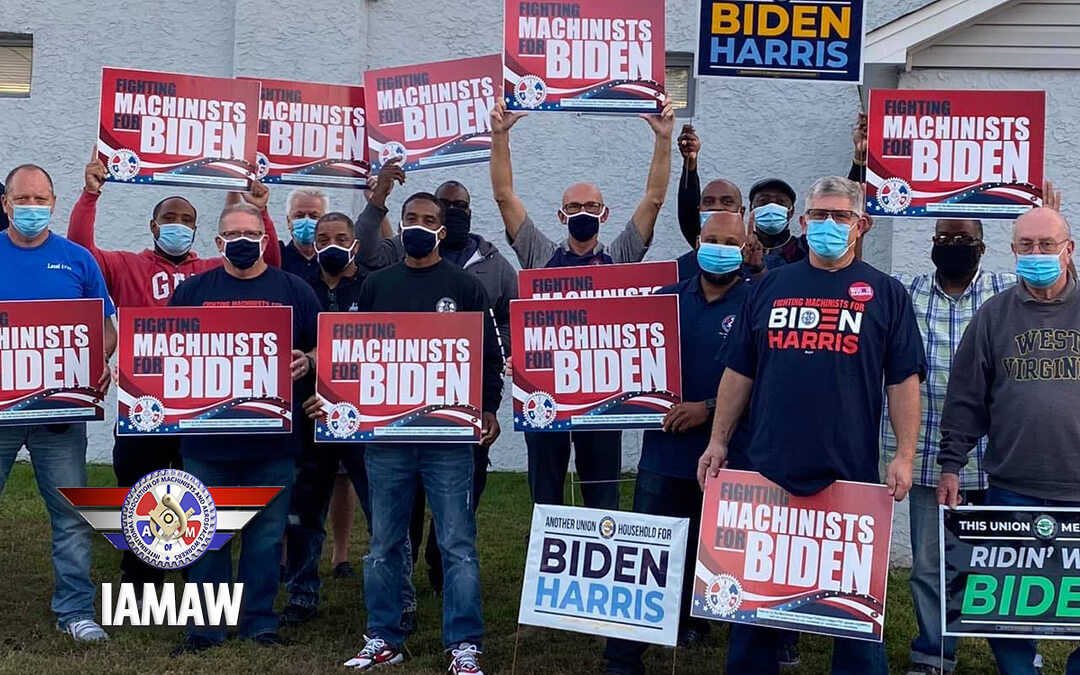
VOTE! Only One Week Left
There are seven days left before Election Day and we want to make sure every Machinists Union member has a plan to vote. There is too much at stake to sit this election out. Visit iam2020.org today to find your polling place, see early voting locations, locate a...