Do Airline Contracts Expire?
You've probably heard of the Railway Labor Act if you work at an airline or are a frequent air traveler. This federal law, enacted in 1926, established a framework for labor-management relations in the railroad and airline industries. One of the Railway Labor Act's most significant features is how it governs airline labor contracts.
Compared to most labor contracts with an expiration date set in stone, union contracts at airlines never truly expire. Instead, they become amendable after a particular date. This means that even if a union contract has passed its amendable date, it remains in effect until a new agreement is reached. Another way to think of it is to consider a union contract at an airline or railroad as "updatable" after a specified date instead of "expired."
This unique feature of airline labor contracts results from the Railway Labor Act's goal of promoting stability and avoiding disruptive labor disputes in industries essential to the national economy. Under the Act, airlines and their unions must engage in bargaining and mediation procedures before any work stoppages or strikes occur. This is intended to provide a safety net against any disruption to air travel that could have far-reaching consequences.
Many union contracts governed by the Railway Labor Act have amendable dates about three years after they are signed. Once the amendable date has passed and the agreement can be updated, both sides have a 30-day window to request to open negotiations. The contract will renew if the parties do not request talks during this time.
It's important to note that the amendable date is one of many opportunities for airlines and their unions to change their labor agreements. Both sides can agree to negotiate outside of this window, and many airlines and unions do so regularly to address changes in the industry and other factors.
The Railway Labor Act's framework for airline labor contracts has helped to promote stability and avoid disruptions in air travel for almost a century. While negotiating new agreements can be lengthy and complex, it has also led to a relatively stable labor environment in an industry essential to the nation's economy.
The Railway Labor Act got its name because it was first drafted to prevent powerful rail unions from paralyzing national transportation, which relied heavily on railroads at the time. Airlines were added to the Act once they began to rival rail as a critical method of travel and shipping.
The International Association of Machinists and Aerospace Workers (IAM) has been negotiating with United Airlines for months over new labor contracts covering thousands of employees. The two sides have made some progress, but one sticking point has yet to be resolved: job security and status protections for workers.
According to the Machinists Union, these protections are critical for ensuring United employees have a stable and secure work environment. The union has proposed specific language that would provide significant job security and protections for customer service and ramp workers, stores, trainers, and load planners at the airline. However, United has yet to include these provisions in any updated contract, leading to an increasingly tense negotiation stalemate.
By putting profits ahead of its workers and failing to provide the job security and protections necessary in today's airline industry, United is positioning itself at a competitive disadvantage. Staffing issues continue to plague the airline industry as carriers seek to recover from the COVID-19 pandemic. While most air travel was grounded in 2020, United offered lucrative payouts to entice as many people as possible to retire as soon as possible. The policy allowed United to pocket millions in unspent wage support payments the airline collected from taxpayers.
United, for its part, has stated that it is committed to achieving a fair and equitable agreement with its union workforce. Still, CEO Scott Kirby has repeatedly demanded the airline return to its dark history of outsourcing employees to low-wage contractors - a return that no union worker supports.


Related News
Thanksgiving Becomes More Union-Made: Seneca Foods Workers Join the IAMAW
Recently, more than 193 seasonal employees at Seneca Foods vegetable processing facility in Leicester, NY voted to join the IAM. This organizing campaign accomplished something relatively unheard of, filing for an election with just 30 percent of the workforce signing...
Machinists Union Integral in 737 Max Recertification, Safety Improvements
The Federal Aviation Administration (FAA) has lifted the grounding of the 737 Max, clearing the way for airlines to begin scheduling flights in the upcoming months. The move comes after more than a year of the IAM partnering with the FAA and Congress to ensure the...
IAMAW International President Robert Martinez Talks Election, Unity on LCLAA Podcast
IAM International President Robert Martinez Jr. recently joined the Labor Council for Latin American Advancement (LCLAA) podcast “El Desvio, Many Roads, one Destination.” Martinez discusses the recent presidential election, COVID-19, and how organizations like the IAM...
Stay up to date with all the latest news and information from the Machinists Union
Do Airline Contracts Expire?
February 22, 2023
You've probably heard of the Railway Labor Act if you work at an airline or are a frequent air traveler. This federal law, enacted in 1926, established a framework for labor-management relations in the railroad and airline industries. One of the Railway Labor Act's most significant features is how it governs airline labor contracts.
Compared to most labor contracts with an expiration date set in stone, union contracts at airlines never truly expire. Instead, they become amendable after a particular date. This means that even if a union contract has passed its amendable date, it remains in effect until a new agreement is reached. Another way to think of it is to consider a union contract at an airline or railroad as "updatable" after a specified date instead of "expired."
This unique feature of airline labor contracts results from the Railway Labor Act's goal of promoting stability and avoiding disruptive labor disputes in industries essential to the national economy. Under the Act, airlines and their unions must engage in bargaining and mediation procedures before any work stoppages or strikes occur. This is intended to provide a safety net against any disruption to air travel that could have far-reaching consequences.
Many union contracts governed by the Railway Labor Act have amendable dates about three years after they are signed. Once the amendable date has passed and the agreement can be updated, both sides have a 30-day window to request to open negotiations. The contract will renew if the parties do not request talks during this time.
It's important to note that the amendable date is one of many opportunities for airlines and their unions to change their labor agreements. Both sides can agree to negotiate outside of this window, and many airlines and unions do so regularly to address changes in the industry and other factors.
The Railway Labor Act's framework for airline labor contracts has helped to promote stability and avoid disruptions in air travel for almost a century. While negotiating new agreements can be lengthy and complex, it has also led to a relatively stable labor environment in an industry essential to the nation's economy.
The Railway Labor Act got its name because it was first drafted to prevent powerful rail unions from paralyzing national transportation, which relied heavily on railroads at the time. Airlines were added to the Act once they began to rival rail as a critical method of travel and shipping.
The International Association of Machinists and Aerospace Workers (IAM) has been negotiating with United Airlines for months over new labor contracts covering thousands of employees. The two sides have made some progress, but one sticking point has yet to be resolved: job security and status protections for workers.
According to the Machinists Union, these protections are critical for ensuring United employees have a stable and secure work environment. The union has proposed specific language that would provide significant job security and protections for customer service and ramp workers, stores, trainers, and load planners at the airline. However, United has yet to include these provisions in any updated contract, leading to an increasingly tense negotiation stalemate.
By putting profits ahead of its workers and failing to provide the job security and protections necessary in today's airline industry, United is positioning itself at a competitive disadvantage. Staffing issues continue to plague the airline industry as carriers seek to recover from the COVID-19 pandemic. While most air travel was grounded in 2020, United offered lucrative payouts to entice as many people as possible to retire as soon as possible. The policy allowed United to pocket millions in unspent wage support payments the airline collected from taxpayers.
United, for its part, has stated that it is committed to achieving a fair and equitable agreement with its union workforce. Still, CEO Scott Kirby has repeatedly demanded the airline return to its dark history of outsourcing employees to low-wage contractors - a return that no union worker supports.
Related
Thanksgiving Becomes More Union-Made: Seneca Foods Workers Join the IAMAW
Recently, more than 193 seasonal employees at Seneca Foods vegetable processing facility in Leicester, NY voted to join the IAM. This organizing campaign accomplished something relatively unheard of, filing for an election with just 30 percent of the workforce signing...
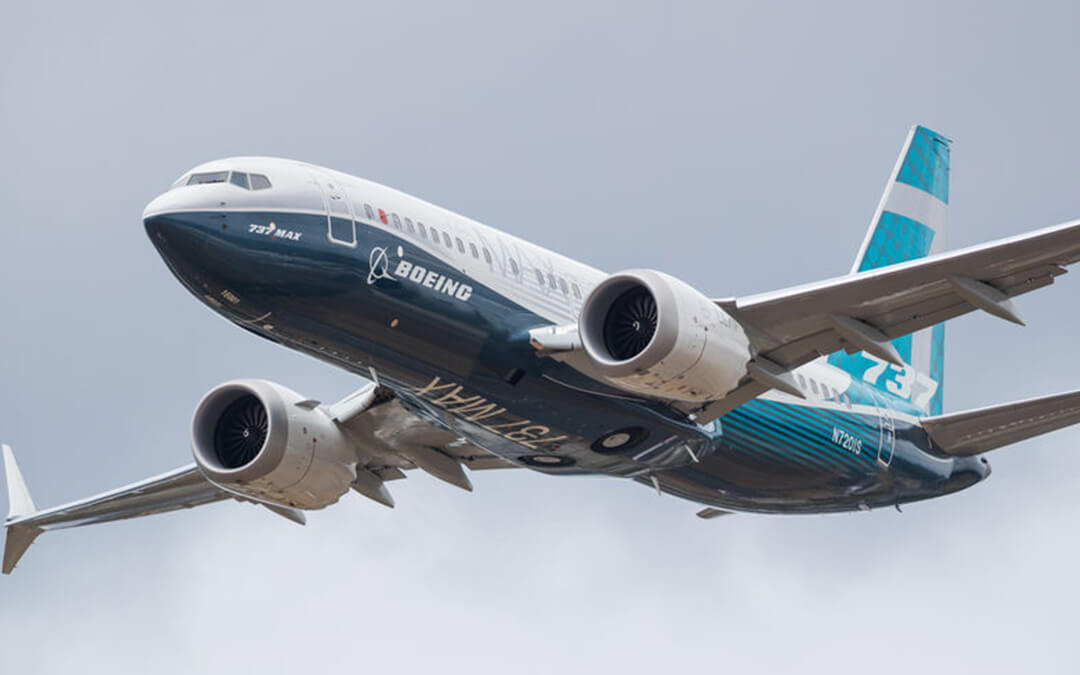
Machinists Union Integral in 737 Max Recertification, Safety Improvements
The Federal Aviation Administration (FAA) has lifted the grounding of the 737 Max, clearing the way for airlines to begin scheduling flights in the upcoming months. The move comes after more than a year of the IAM partnering with the FAA and Congress to ensure the...
IAMAW International President Robert Martinez Talks Election, Unity on LCLAA Podcast
IAM International President Robert Martinez Jr. recently joined the Labor Council for Latin American Advancement (LCLAA) podcast “El Desvio, Many Roads, one Destination.” Martinez discusses the recent presidential election, COVID-19, and how organizations like the IAM...