Bureau of Labor Statistics: Union Pay Gap Expands in 2023
Bureau of Labor Statistics: Union Pay Gap Expands in 2023
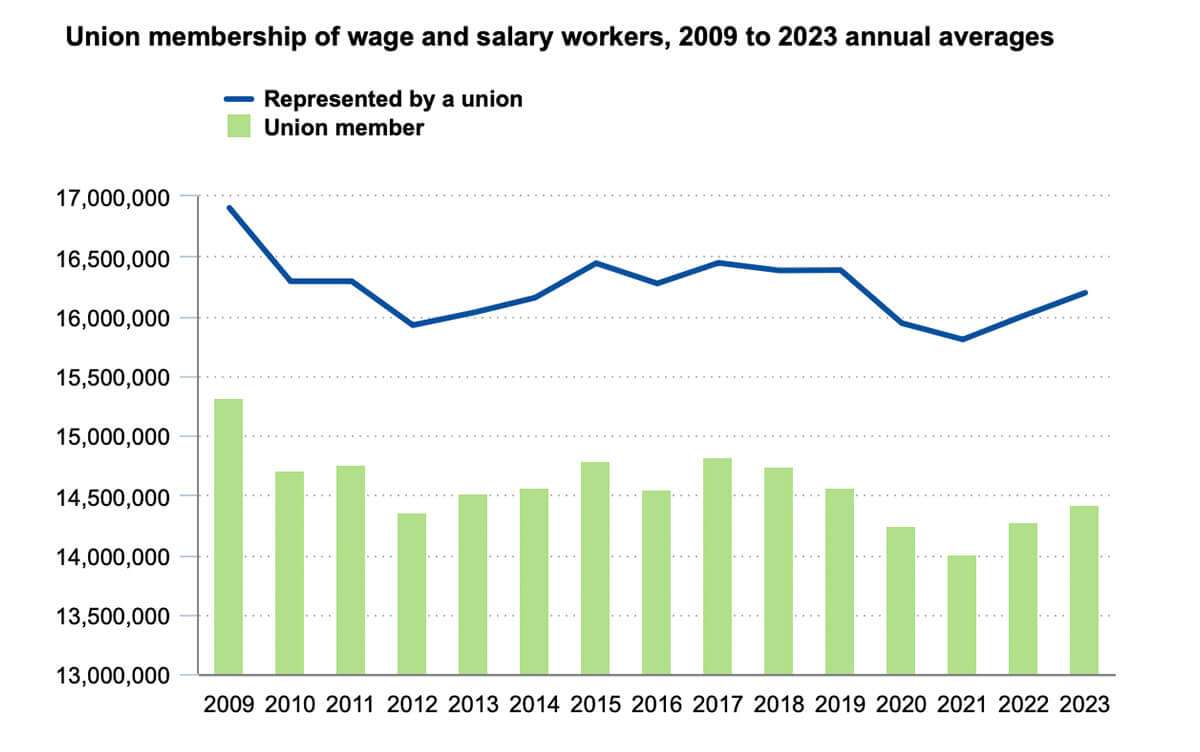
WASHINGTON DC - According to the February report from the Bureau of Labor Statistics, union membership in 2023 held steady and did not decline despite employers spending over $400 million to oppose unification efforts in their workplaces. According to the report, 16.2 million American workers were represented by a union, a gain of 200,000 over 2022.
Union wages continued to lead the average typical weekly earnings of non-union Americans in 2023. Among full-time wage and salary workers, union members had a median usual weekly earnings of $1,263 in 2023, while non-union workers continued to fall behind, with a median usual weekly earnings of only $1,090.
This represents wages that are 14 percent higher than their non-union counterparts each week, translating to an additional $173 per week, $692 per month, and $8,996 per year. This figure is up from 2022, when union pay was 11.2% higher than non-union work.
While earnings remain a central focus for most workers, the issue of work-life balance is a hot topic within the American workforce. Interestingly, union members, particularly in commercial aviation, enjoy an enviable degree of control over their schedules. They can trade away or pick up work shifts from coworkers and seasonal bids to work the hours, work areas, and days off in order of years on the job that are unheard of outside of unions. This level of schedule flexibility is nearly unheard of outside union workplaces.
Retirement benefits are another area where union membership pays off. In private industry, 93 percent of union workers had access to a retirement plan, compared to only 67 percent of non-union workers. Union workers were five times more likely to have access to defined benefit retirement plans, which guarantee a predictable income during retirement.
Healthcare benefits are nearly universal among union workers, with 96 percent having access compared to 69 percent of non-union workers. Employers were responsible for 80 percent of the premiums for medical care and family coverage for union workers, compared to 65 percent for non-union workers.
To combat these advances, companies have spent more than $400 million to prevent their employees from forming unions. According to data compiled by the Economic Policy Institute, attacks on union organizing have cost companies more than $400 million a year.
The study, released in March 2023, estimates that employers spend $433 million per year on "union-avoidance" consultants. According to the study, these consultants are paid $350 an hour and up, or $2,500 daily rates, to prevent their workers from banding together as a union. The actual figures are likely much higher since employers are only required to disclose a fraction of their union avoidance costs.
A portion of this spending is recouped through tax laws; businesses can deduct union avoidance costs from their tax liabilities.
These efforts have kept union membership as low as possible for these companies despite historically high support for unions. Around 67% or two-thirds of Americans support unions, as per a Gallup poll released in September. Yet, due to the overwhelming spending companies are using to prevent the formation of unions, only about 11.2% of Americans report union membership.
About 16.2 million American workers are represented by labor unions, a figure that includes 14.4 union members and 1.8 million workers who refuse to support a union but whose jobs are covered by a union agreement.

Related News
Help Save Hundreds of Thousands of Jobs on Thursday’s IAM Airline Day of Action
IAM airline members are mobilizing this Thursday, Sept. 17 in 32 cities in over 20 states, either in person or virtually with Senators and Senate staff, to demand that Congress act now to pass legislation that would stem hundreds of thousands of layoffs slated to...

Union Safety Doesn’t Stop for Pandemic
The goal of a Ground Safety Action Program (GSAP) is to enhance aviation safety by preventing personnel injuries, accidents, and incidents. Its focus is to encourage voluntary reporting of safety hazards and events that come to the attention of members of IAMAW...
IAM Political Action: Support Clean Extension of Payroll Support to Prevent Airline Furloughs
In March, as U.S. COVID-19 cases began rising exponentially, Congress rose to the occasion by enacting the CARES Act to provide assistance to tens of millions of Americans who found their financial security, if not their health, directly imperiled by the pandemic....
Stay up to date with all the latest news and information from the District 141 of the Machinists Union
Bureau of Labor Statistics: Union Pay Gap Expands in 2023
6 February 2024
WASHINGTON DC - According to the February report from the Bureau of Labor Statistics, union membership in 2023 held steady and did not decline despite employers spending over $400 million to oppose unification efforts in their workplaces. According to the report, 16.2 million American workers were represented by a union, a gain of 200,000 over 2022.
Union wages continued to lead the average, typical weekly earnings of non-union Americans in 2023. Among full-time wage and salary workers, union members had a median usual weekly earnings of $1,263 in 2023, while non-union workers continued to fall behind, with a median usual weekly earnings of only $1,090.
This represents wages that are 14 percent higher than their non-union counterparts each week, translating to an additional $173 per week, $692 per month, and $8,996 per year.
While earnings remain a central focus for most workers, the issue of work-life balance is a hot topic within the American workforce. Interestingly, union members, particularly in commercial aviation, enjoy an enviable degree of control over their schedules. They can trade away or pick up work shifts from coworkers and seasonal bids to work the hours, work areas, and days off in order of years on the job that are unheard of outside of unions. This level of schedule flexibility is nearly unheard of outside union workplaces.
Retirement benefits are another area where union membership pays off. In private industry, 93 percent of union workers had access to a retirement plan, compared to only 67 percent of non-union workers. Union workers were five times more likely to have access to defined benefit retirement plans, which guarantee a predictable income during retirement.
Healthcare benefits are nearly universal among union workers, with 96 percent having access compared to 69 percent of non-union workers. Employers were responsible for 80 percent of the premiums for medical care and family coverage for union workers, compared to 65 percent for non-union workers.
To combat these advances, companies have spent more than $400 million to prevent their employees from forming unions. According to data compiled by the Economic Policy Institute, attacks on union organizing have cost companies more than $400 million a year.
The study, released in March 2023, estimates that employers spend $433 million per year on "union-avoidance" consultants. According to the study, these consultants are paid $350 an hour and up, or $2,500 daily rates, to prevent their workers from banding together as a union. The actual figures are likely much higher since employers are only required to disclose a fraction of their union avoidance costs.
A portion of this spending is recouped through tax laws; businesses can deduct union avoidance costs from their tax liabilities.
These efforts have kept union membership as low as possible for these companies despite historically high support for unions. Around 67% or two-thirds of Americans support unions, as per a Gallup poll released in September. Yet, due to the overwhelming spending companies are using to prevent the formation of unions, only about 11.2% of Americans report union membership.
About 16.2 million American workers are represented by labor unions, a figure that includes 14.4 union members and 1.8 million workers who refuse to support a union but whose jobs are covered by a union agreement.

Related
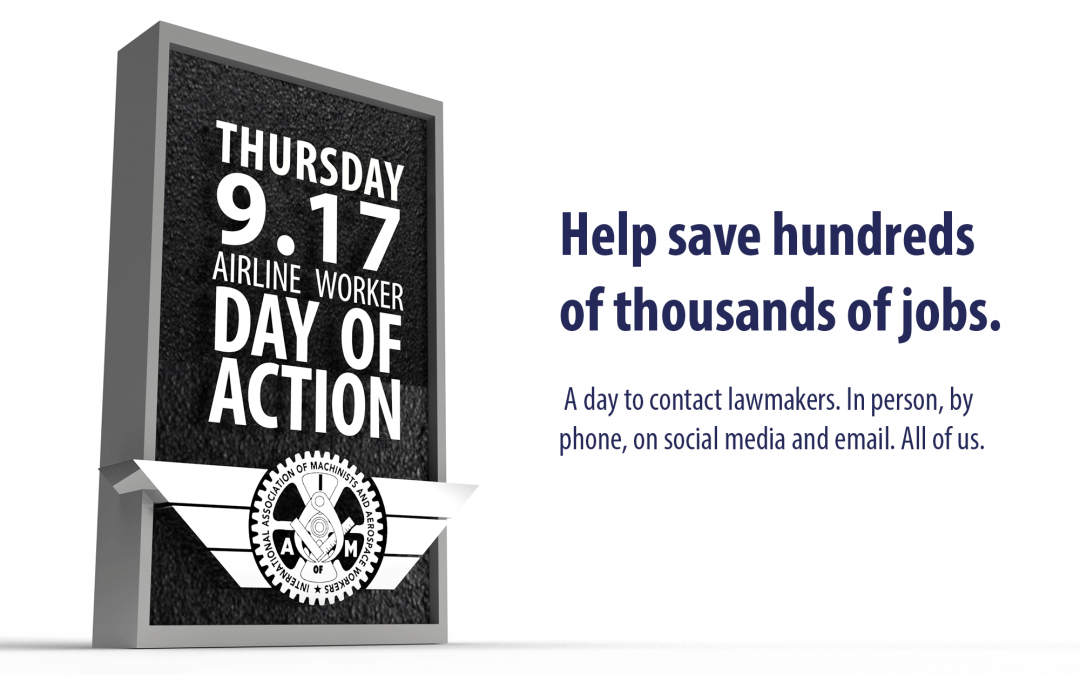
Help Save Hundreds of Thousands of Jobs on Thursday’s IAM Airline Day of Action
IAM airline members are mobilizing this Thursday, Sept. 17 in 32 cities in over 20 states, either in person or virtually with Senators and Senate staff, to demand that Congress act now to pass legislation that would stem hundreds of thousands of layoffs slated to...

Union Safety Doesn’t Stop for Pandemic
The goal of a Ground Safety Action Program (GSAP) is to enhance aviation safety by preventing personnel injuries, accidents, and incidents. Its focus is to encourage voluntary reporting of safety hazards and events that come to the attention of members of IAMAW...

IAM Political Action: Support Clean Extension of Payroll Support to Prevent Airline Furloughs
In March, as U.S. COVID-19 cases began rising exponentially, Congress rose to the occasion by enacting the CARES Act to provide assistance to tens of millions of Americans who found their financial security, if not their health, directly imperiled by the pandemic....